The crackdown of dissent on social media during protests demanding resignation of the Chief Election Commissioner of India.
(Disclaimer: SFLC.in does not endorse any of the posts, they are reproduced solely for the purpose of documenting and reporting on content takedowns and restrictions on online speech.)
The silencing of protesters and the curtailment of the right to protest and dissent in Delhi from October 10th onwards the Delhi Police and, by extension, the Government, did not remain confined just to the streets of Delhi. The protests called on October 10th by the Cockroach Janta Party (CJP), a political pressure group and Opposition parties were for the resignation of Chief Election Commissioner Gyanesh Kumar and the alleged illegal removal of 13 crore citizens from electoral rolls through the Special Intensive Revision (SIR) process and irregularities in elections. As the Delhi Police fortified the capital and detained thousands of people, millions followed what was unfolding in Delhi through social media. While restrictions were imposed on protesters on the streets of Delhi and their fundamental rights to freedom of speech and expression, and to protest and dissent were curtailed, we tracked similar instances of restrictions on social media as well, where users saw their digital rights being curtailed.
When people are prevented from gathering and expressing dissent on the streets, social media often becomes an important space for public participation. But what happens when even that space becomes difficult to access? In the days leading up to the proposed protest on October 10th, multiple users took to social media to express dissent , to document violations and to even joke and share memes about the situations that were unravelling in the country. This trend has further amplified since October 10th. Journalists, media organisations, opposition political members, content creators, activists, lawyers, students, general public, and those who could not make it to Delhi, turned to social media as a resort and posted extensively about the protest, the Government, the Election Commission of India (ECI), Chief Election Commissioner Gyanesh Kumar and Delhi Police amongst others. While these users expected a safe space for expression, what they were faced with was the polar opposite: content takedowns, account blocks and other forms of account restrictions coming from the legal orders of government, its agencies and law enforcement bodies, and censorship carried out by the platforms themselves, of their own initiative, without any legal order compelling them to do so. Account restrictions included suspensions, disabling of features like livestreaming, commenting, reposting, and even shadowbanning and other visibility restrictions. With platforms offering no adequate means of redressal, users were left with neither recourse nor explanation. Many were even forced to start over with backup accounts, leaving behind entire communities and histories – years of posts, followers, reach and credibility they had painstakingly built all lost in a single moment. In effect, the very platforms users relied to speak out became spaces where their voices could be silenced, without any meaningful remedy, their audiences lost and their ability to participate in public discourse curtailed.
Through this blog, we at SFLC.in examine patterns from over 200 posts that were taken down in the past weeks which have been documented on SFLC.in’s Free Speech Tracker across eight categories, and analyse the kinds of restrictions that are imposed on social media users during the protests. We examine the use of government orders under the Information Technology Act, 2000, and its Rules, and other legal mechanisms to restrict content and censor discourse, and assess the impact of these actions on digital rights and users’ fundamental right to freedom of speech and expression.
Breakdown of Takedowns
For the purpose of this analysis we will be specifically looking at instances from Meta Platforms (Instagram, Facebook, Threads) and X.
1. Details of Protest/ Photos from Protest
The first protest demanding the resignation of the Chief Election Commissioner was held in Mumbai on October 2nd. In the days leading up to the protests, social media users expressed interest in participating, particularly after the July protests at Jantar Mantar in Delhi over the NEET paper leak and the demand for the Education Minister’s resignation. Those who could not participate in the first protest also expressed interest in joining the next round of demonstrations in Delhi.
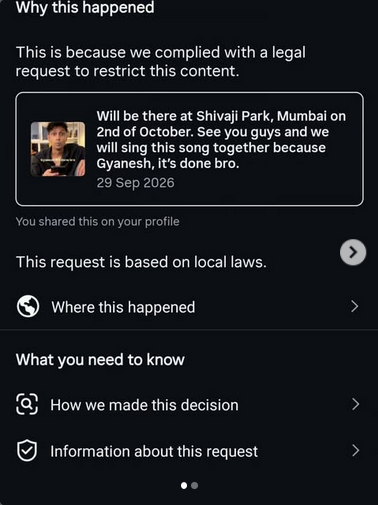
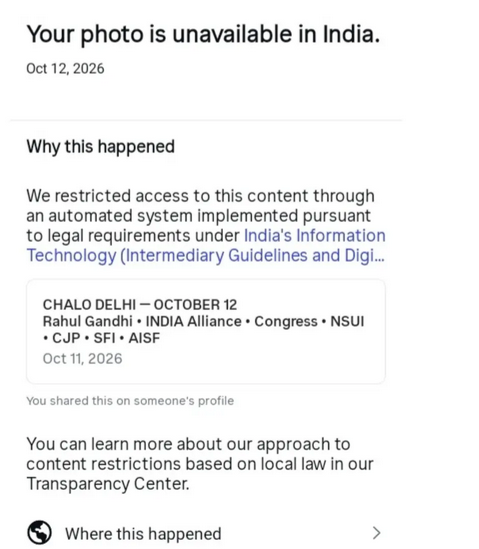
One such post was shared by popular stand-up comedian Brijesh Jha (@officialbrijeshjha) on September 29th , who posted about attending the October 2nd protest. This post was subsequently taken down. Similarly, when Leader of the Opposition Rahul Gandhi called for “Chalo Delhi” on October 13th, users who reshared the call , like @paul._geo_udf, were also reportedly subjected to restrictions.
Posts informing users about developments happening at the ongoing protests were restricted. Some of these even included posts of journalists reporting on the protest from ground.
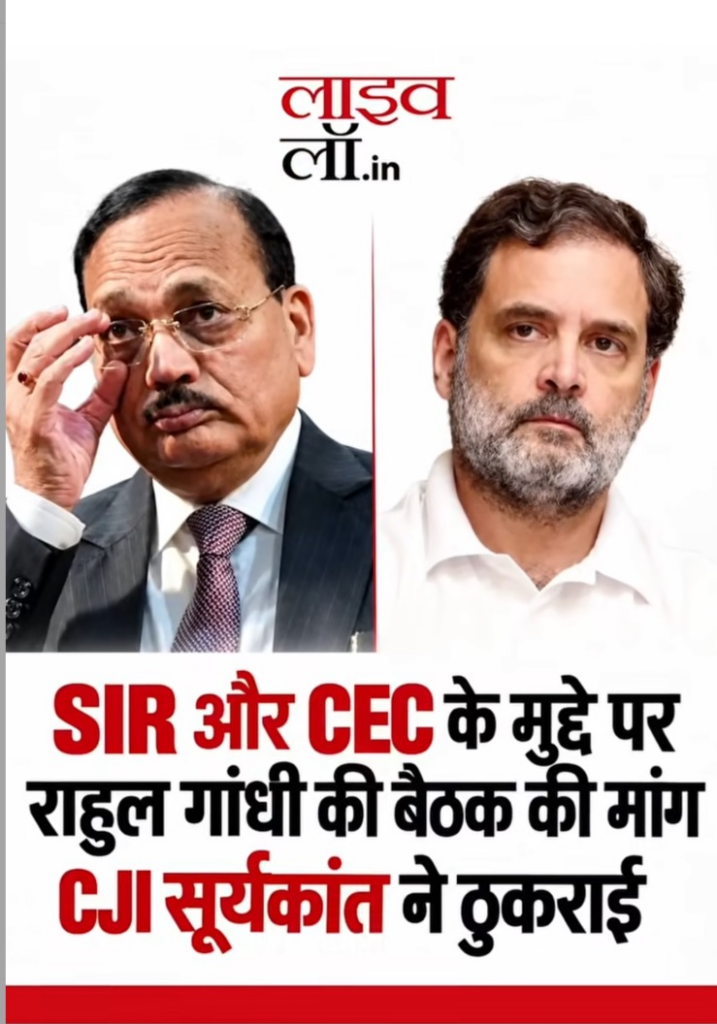
Another example is a post by @LiveLawHindi on Instagram featuring a news card stating that Chief Justice of India Surya Kant had rejected Rahul Gandhi’s request for a meeting regarding the Election Commission’s Special Intensive Revision (SIR) process that was restricted in India.
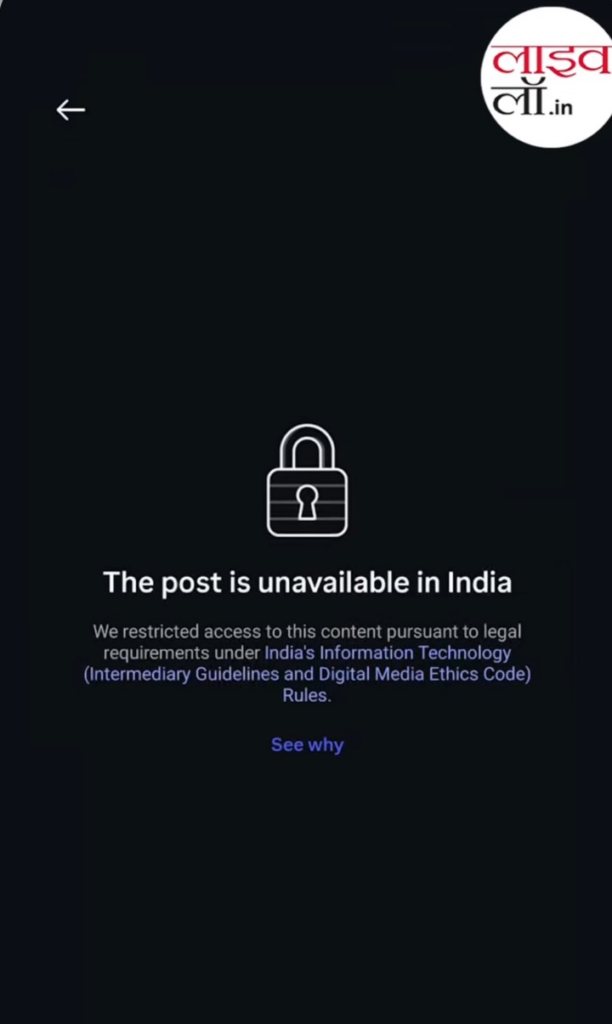
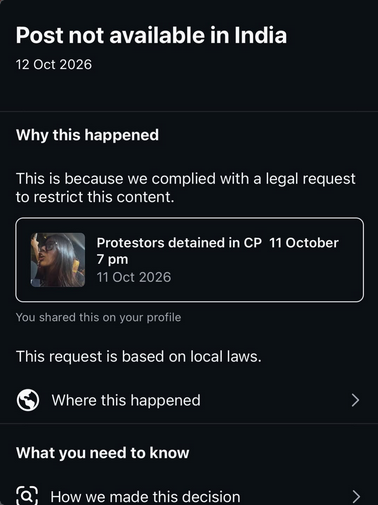
Even photographs from the protest site and posts informing the de-notification of Jantar Mantar as a protest site on October 12th, were taken down. In another instance, a post discussing remarks by the UN Office of the High Commissioner for Human Rights (OHCHR) regarding the government’s handling of the protests was also restricted.
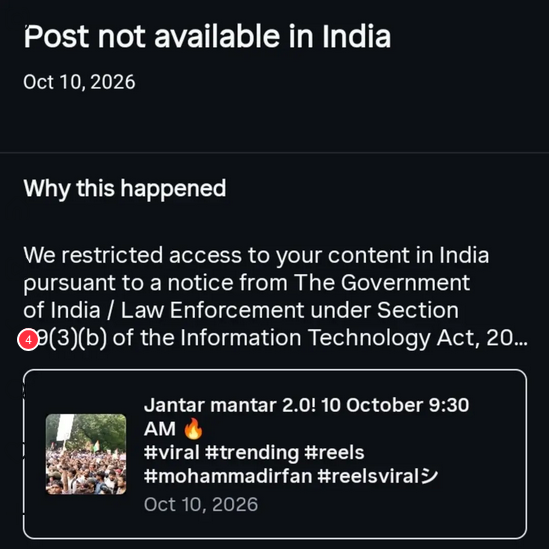
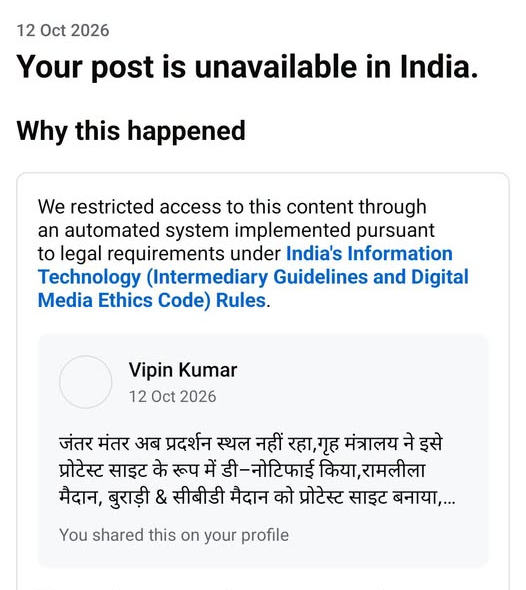
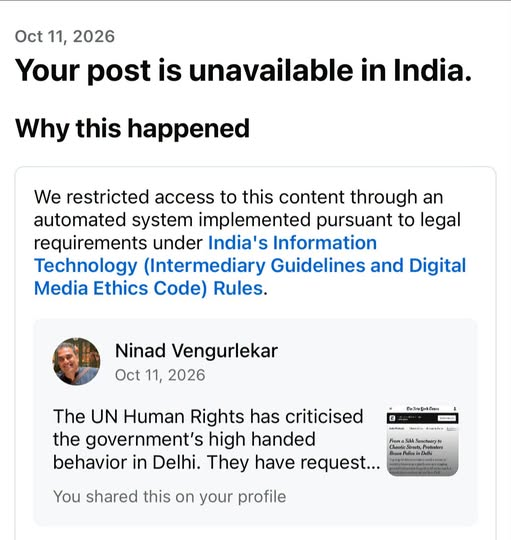
Many of these posts shared factual information about the protests, including updates from the ground, news reports, and information about restrictions on public demonstrations. They were not necessarily political statements or expressions of support for any particular party or ideology. The removal of the above
2. Content about Delhi Police Brutality
The protests saw multiple reported instances of police brutality, several of which were also documented and circulated on social media platforms.
On October 3rdrd, three women journalists alleged that they had been sexually harassed by Vivek Bhagat, an Assistant Commissioner of Police (ACP) and Sub-Divisional Police Officer in Connaught Place, Delhi while reporting on a protest at Jantar Mantar against Chief Election Commissioner Gyanesh Kumar. As the allegations gained traction on social media and were picked up by journalists and content creators, many posts reporting the incident and criticising Bhagat’s promotion to Additional Deputy Commissioner of Police on October 5th (this promotion was later withheld) received takedown notices.
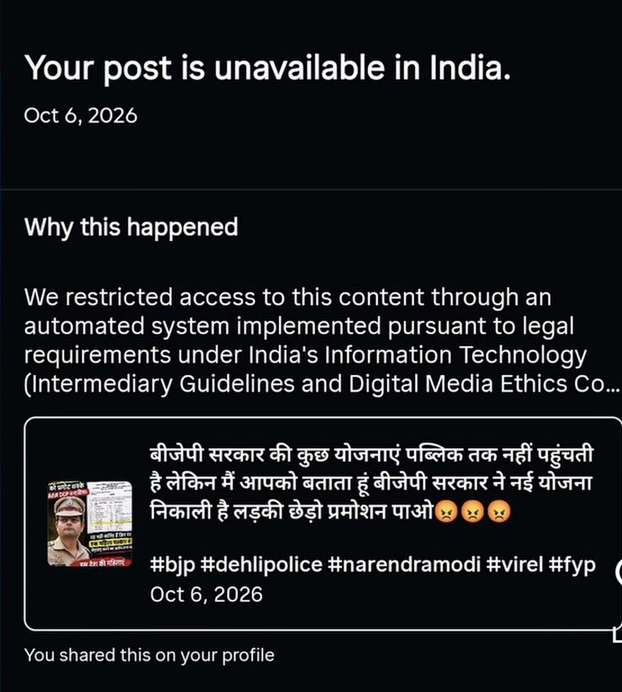
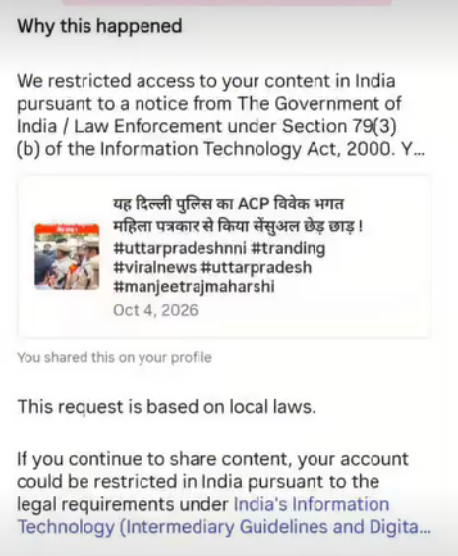
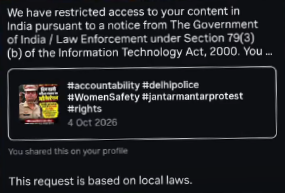
Multiple incidents of Delhi police assaulting protesters and brutally handling protesters were reported during the protests on October 10th and 11th, with many taking to social media to document and share and share the same. One such post, shared by the media outlet Mathrubhumi (@mathrubhumienglish), featured a video that had crossed 11 million views before it was restricted in India.
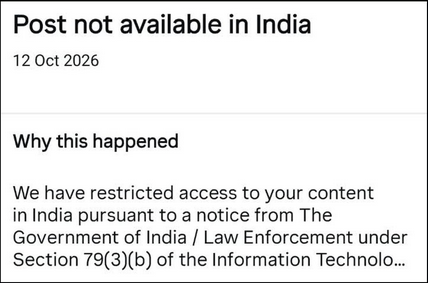
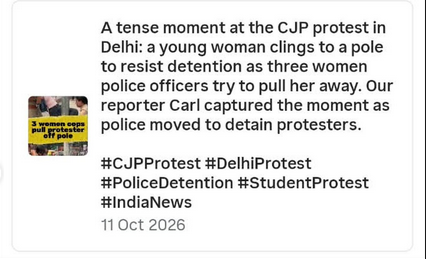
Another instance of police brutality, documented by a protester (@saavy_du) on Instagram where she shared a video of Delhi Police personnel tearing women’s clothes while attempting to detain them,was later restricted in India. Similarly, a video posted by @LiveLawHindi featuring clips of Delhi Police personnel allegedly verbally abusing a female lawyer who was present at the protest alongside other lawyers was also restricted in India.
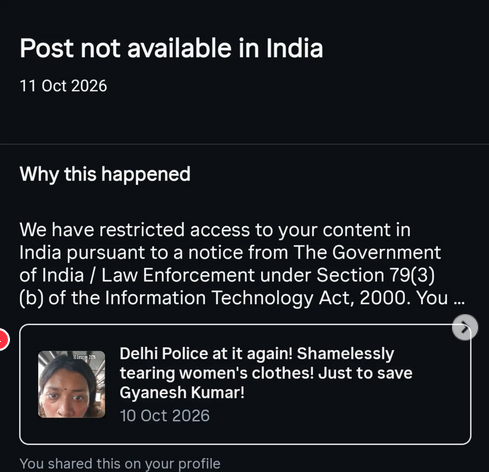
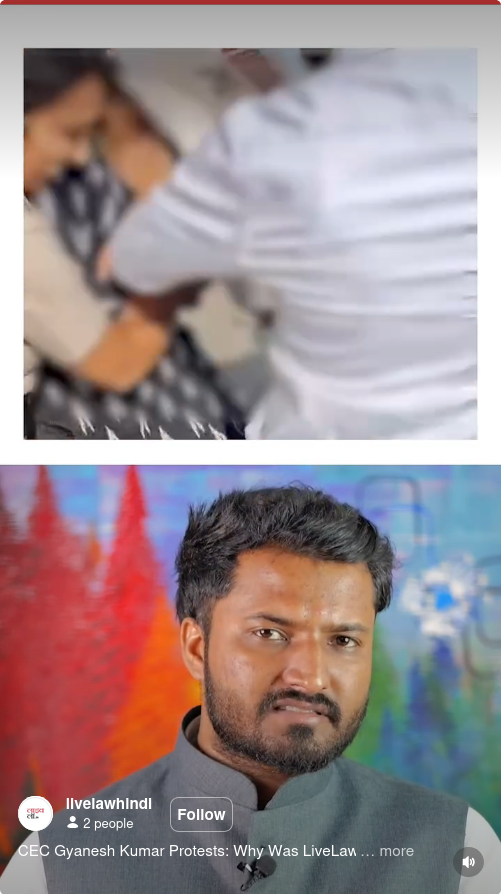
Protesters resorted to social media to document instances of police misconduct and bring them to public attention. Restricting such posts defeats the very purpose for which they were shared, and raises very pertinent very pertinent questions as to why video evidence of such incidents is being removed from public view and scrutiny, and whether such removals are carried out purposefully, and whether such removals are carried out purposefully.
3. Journalists and Media
Journalists and media houses faced police violence, arbitrary arbitrary detentions, and restrictions on their reporting throughout the protests. Despite these challenges, including internet shutdowns on the ground, journalists continued to cover the demonstrations and document events through different mediums, including social media. However, their reporting also faced restrictions on these platforms, with posts being taken down and accounts withheld or temporarily restricted.
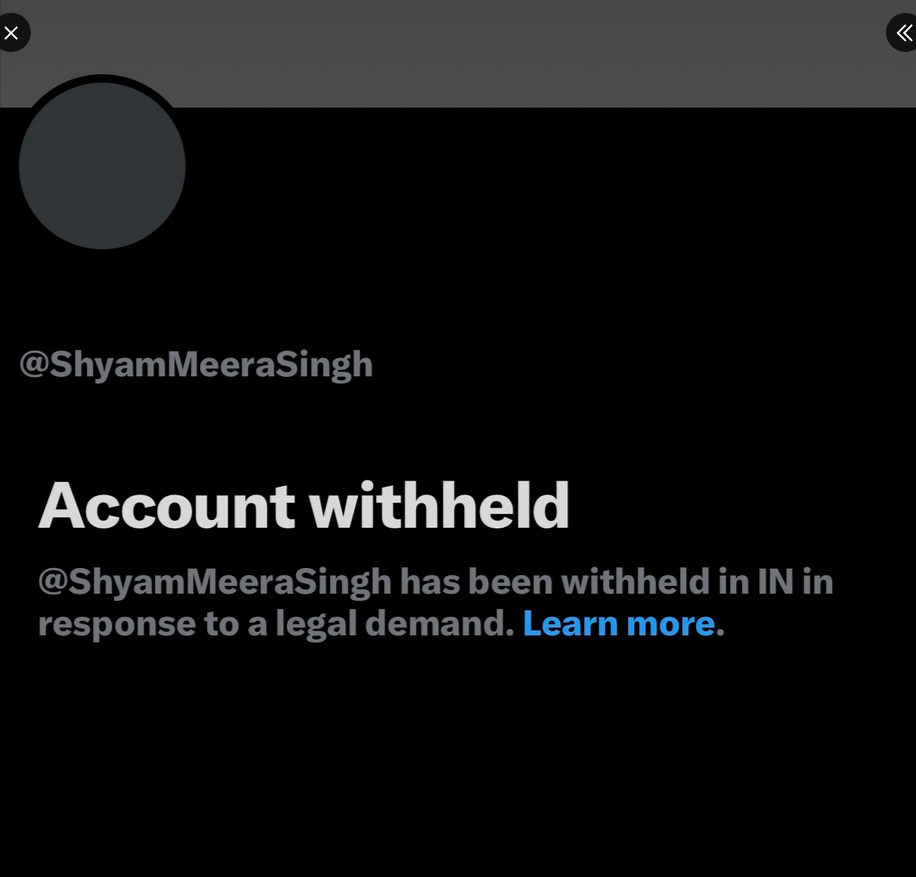
These restrictions had a particular impact on independent journalists who rely on social media platforms to reach audiences and monetise their work. For instance,, the personal account of journalist Shyam Meera Singh (@ShyamMeeraSingh), who runs the digital media platform StrikeOriginals, was withheld in India. He had extensively covered the protests, documenting incidents of alleged police brutality, including an incident in which individuals wearing metal knuckles allegedly assaulted protesters and another in which women’s clothes were reportedly torn, while Delhi Police allegedly failed to intervene.
Independent journalists Rosy (@unfiltered_rosy2026) and Gajendra Singh (@desipatrkar) also had their accounts temporarily restricted. Shortly before these restrictions, both had extensively reported on the allegations of sexual harassment against ACP Vivek Bhagat, discussed in Section 2 of this blog.
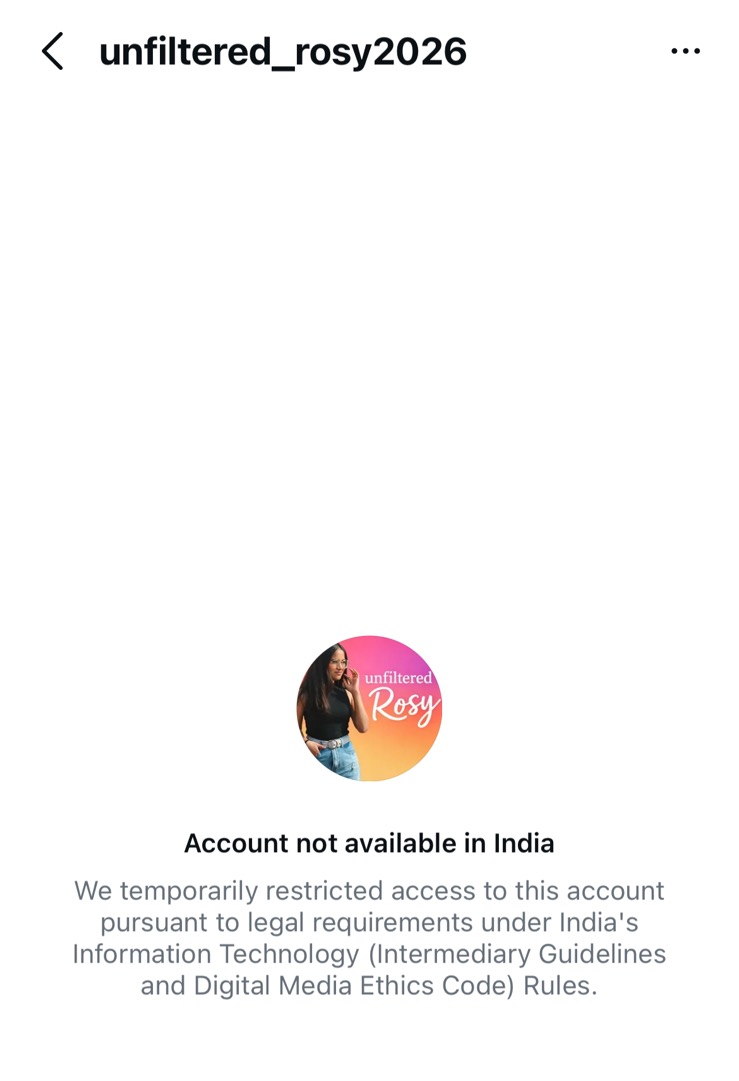
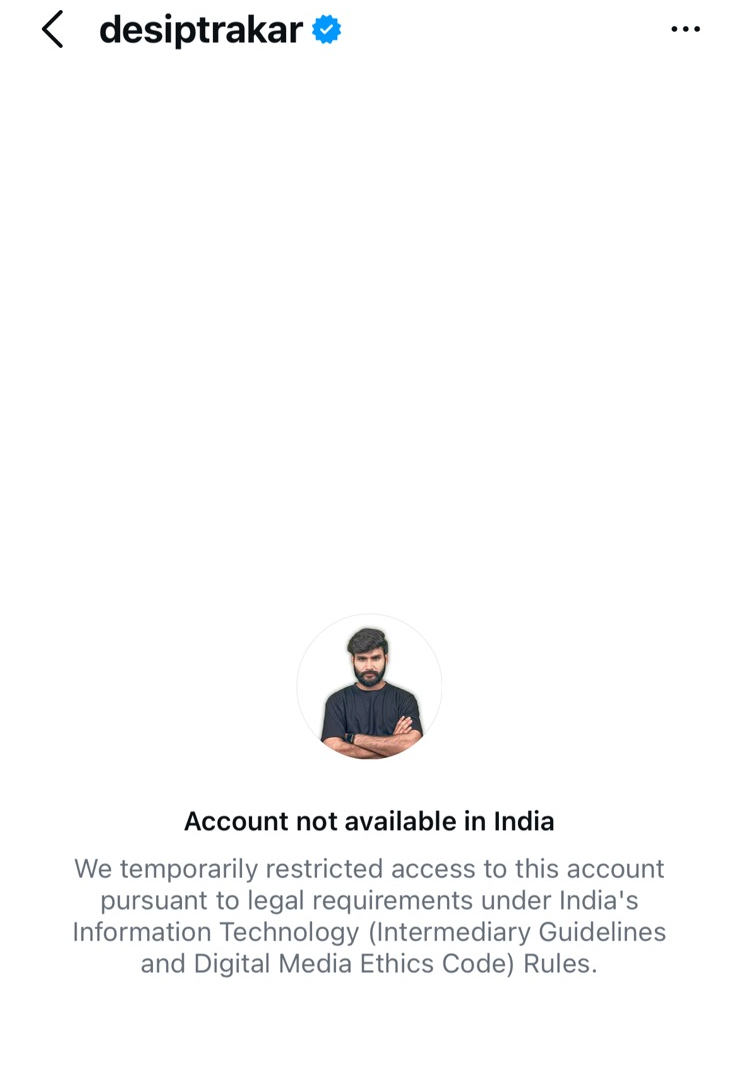
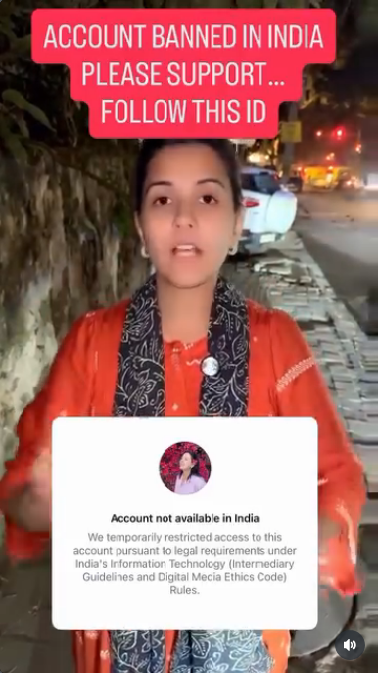
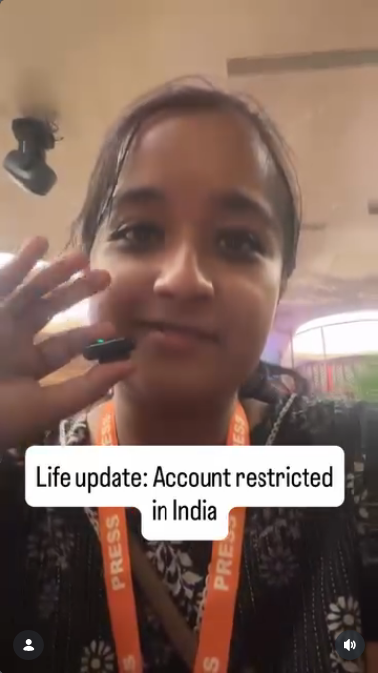
Most of these journalists created backup accounts and continued their work through those accounts, even after losing access to their original accounts, which had more followers,received greater views, and had strong communities and years of credibility associated with them. Journalist Kashish (@reporter_kashish) also reported that her Instagram account had been restricted in India, following earlier takedowns of multiple posts. In a video posted after creating a new account, she speculated that her questions to the government may have been the reason for the restrictions, but said she was determined to continue asking questions and would not be silenced. Shubangi (@shubhangi_decodes) a 22 year old journalist is another example, in her video posted from her new account she says this takedown made her realize that she is doing the right thing with her work and that she will come back stronger.
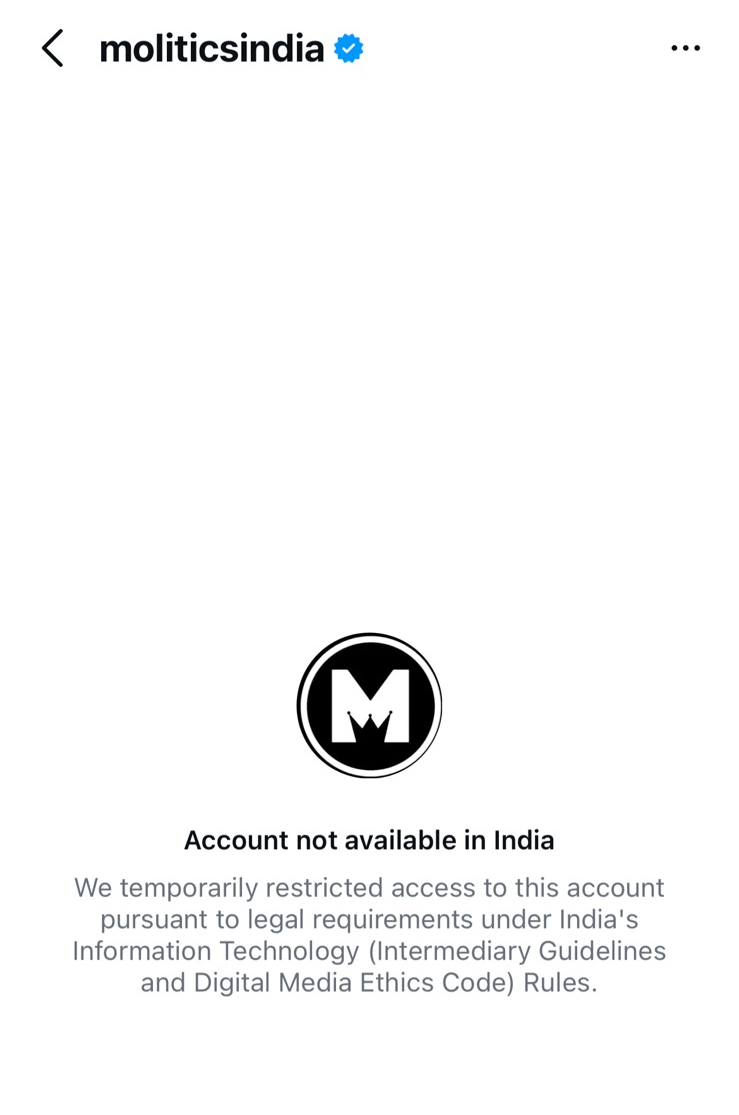
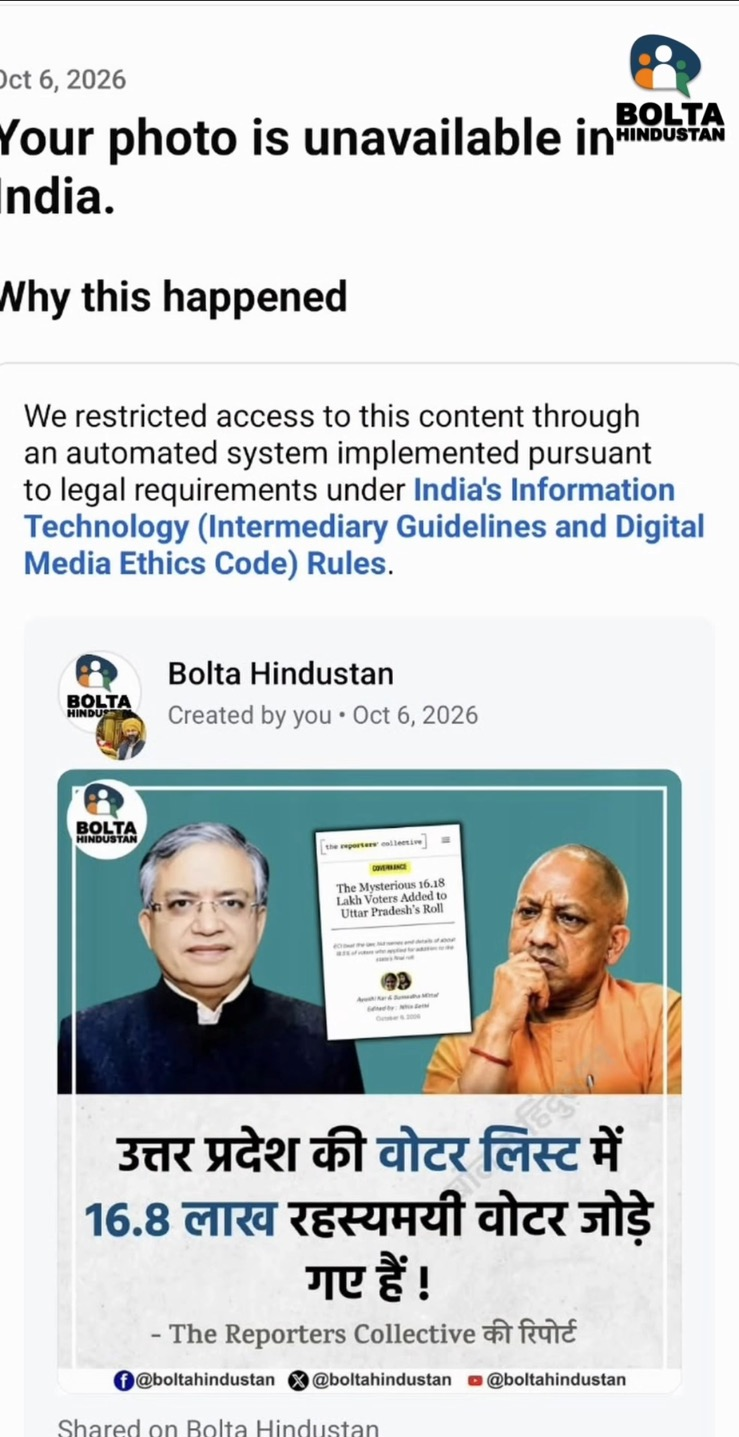
Digital media outlets like Molitics saw their Instagram page (@molitics) being affected by account takedown. Molitics had previously also faced account takedown on Facebook in March 2026. In a press briefing during the earlier takedown, representatives of Molitics had described the takedown as an attempt to crackdown on political dissent. Bolta Hindustan, a Hindi-language digital news platform, reportedly had five posts restricted in India. One of these featured a news byte based on a report by The Reporters’ Collective concerning inaccuracies in electoral rolls in Uttar Pradesh. Independent media organisation, The Observer Post also faced similar restrictions on their post on the assault of women protesters.
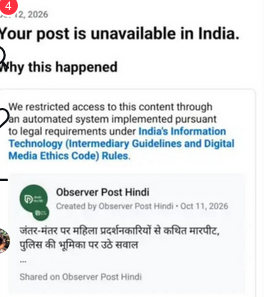
Other restrictions faced by media houses such as Mathrubhumi (@mathrubhumienglish) and India’s leading legal updates channel (@livelawhindi) while reporting on alleged police brutality are discussed in Section 2 of this blog above.
4. CJP Allied Accounts
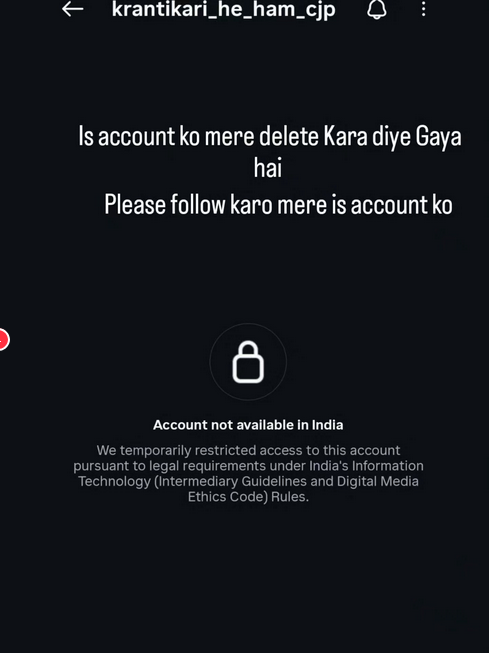
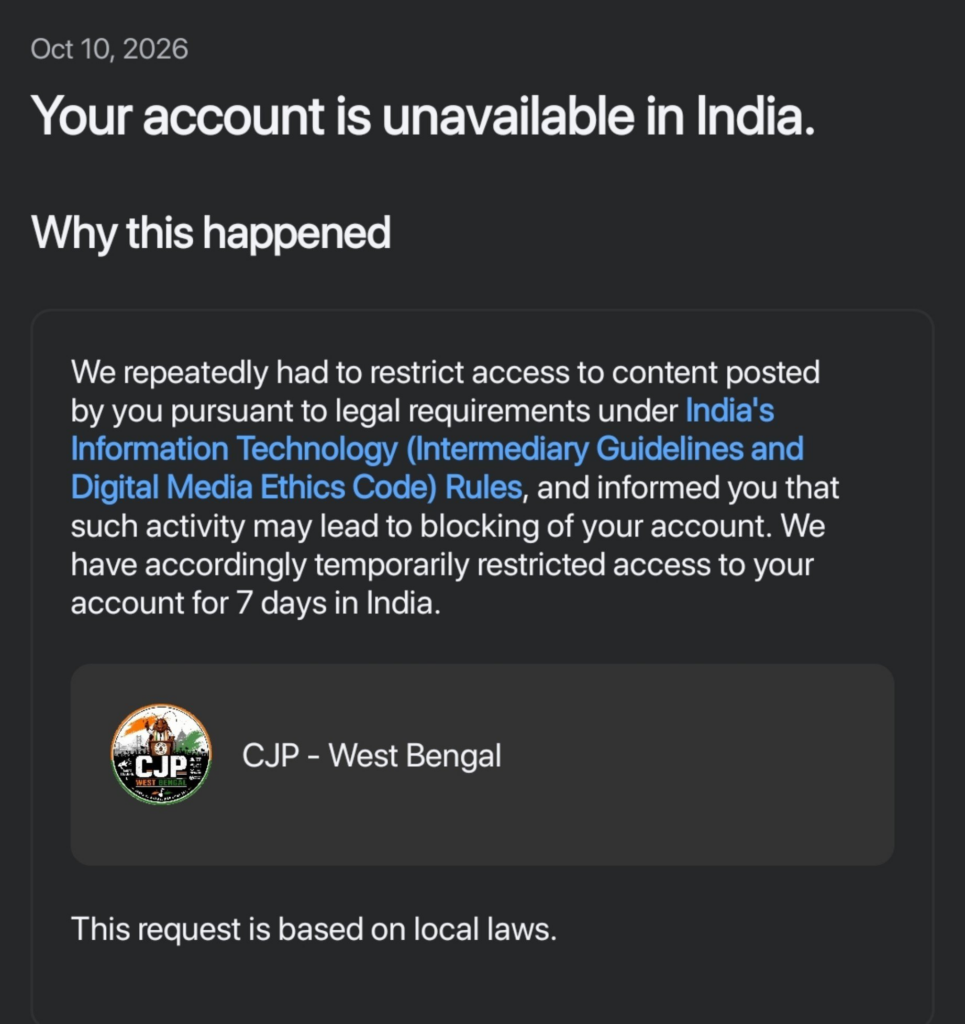
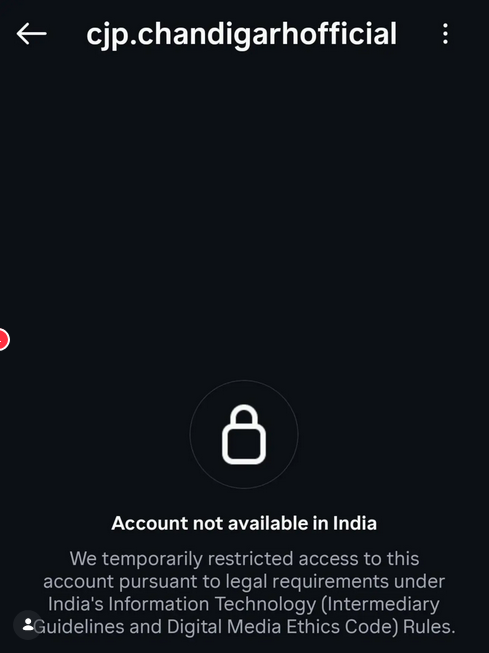
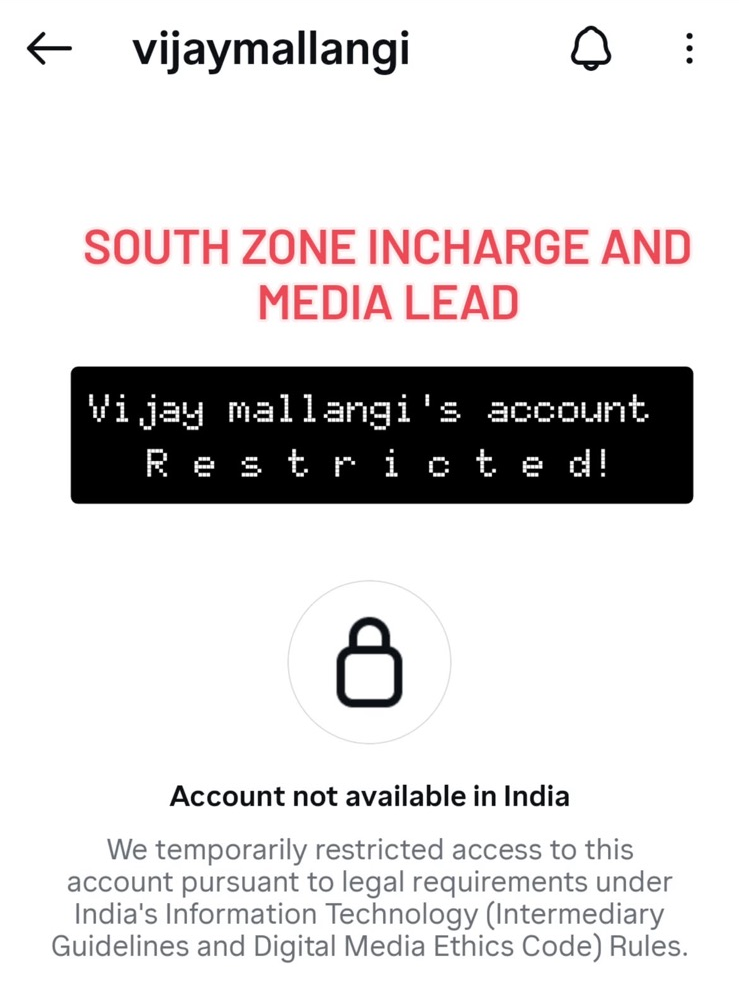
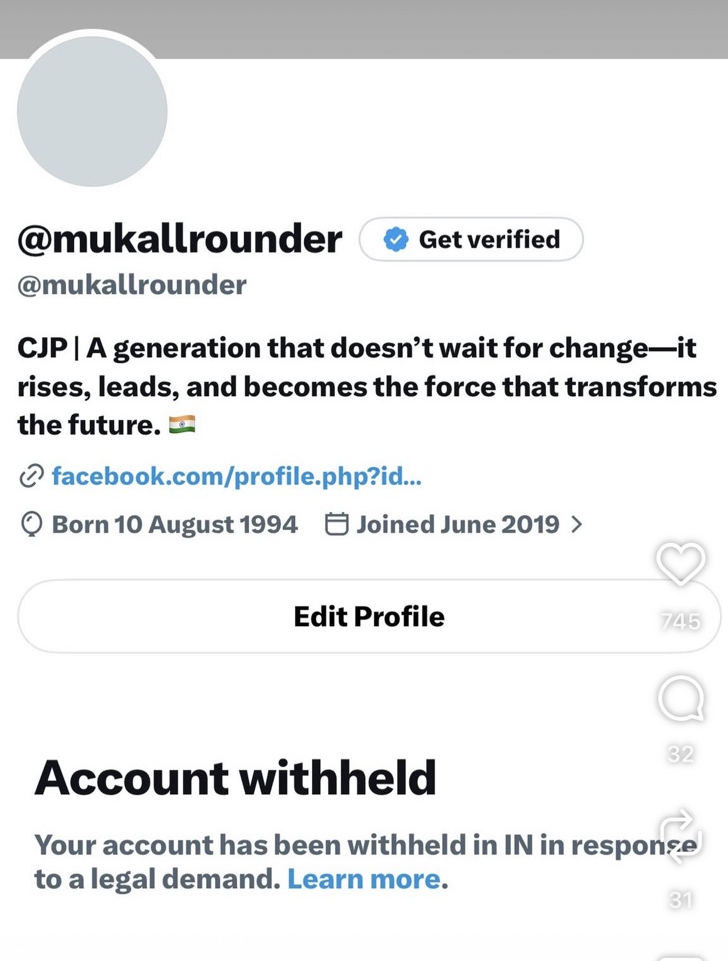
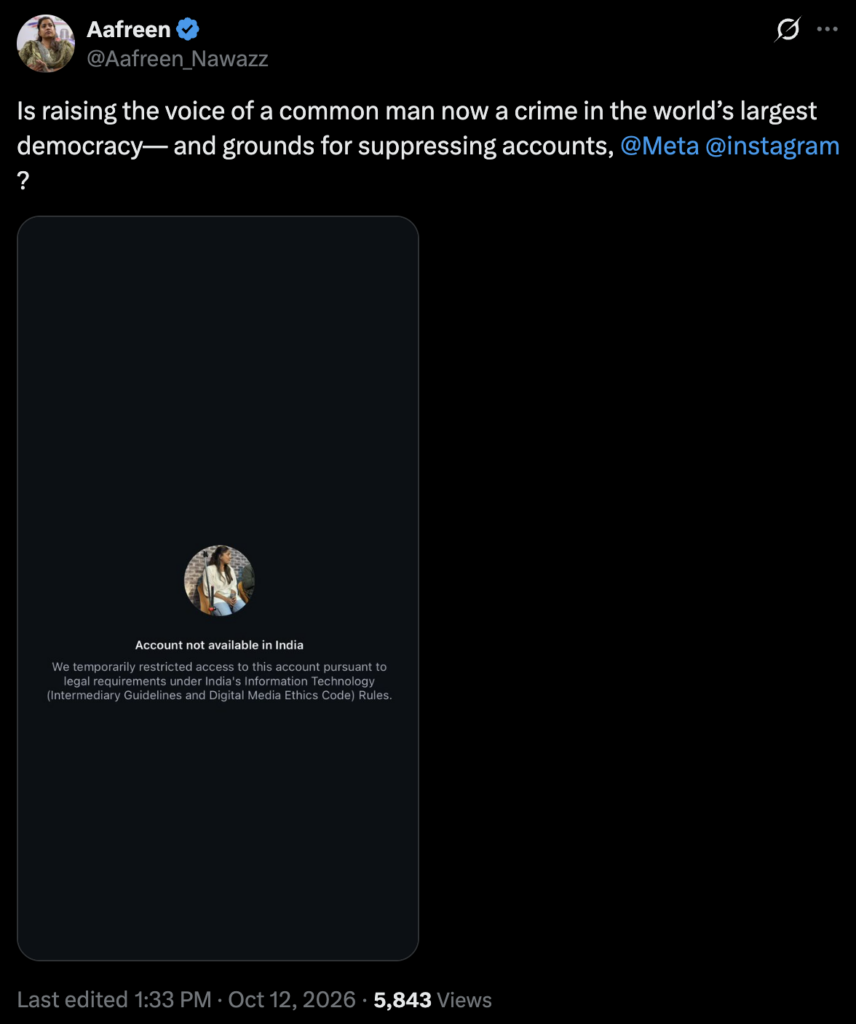
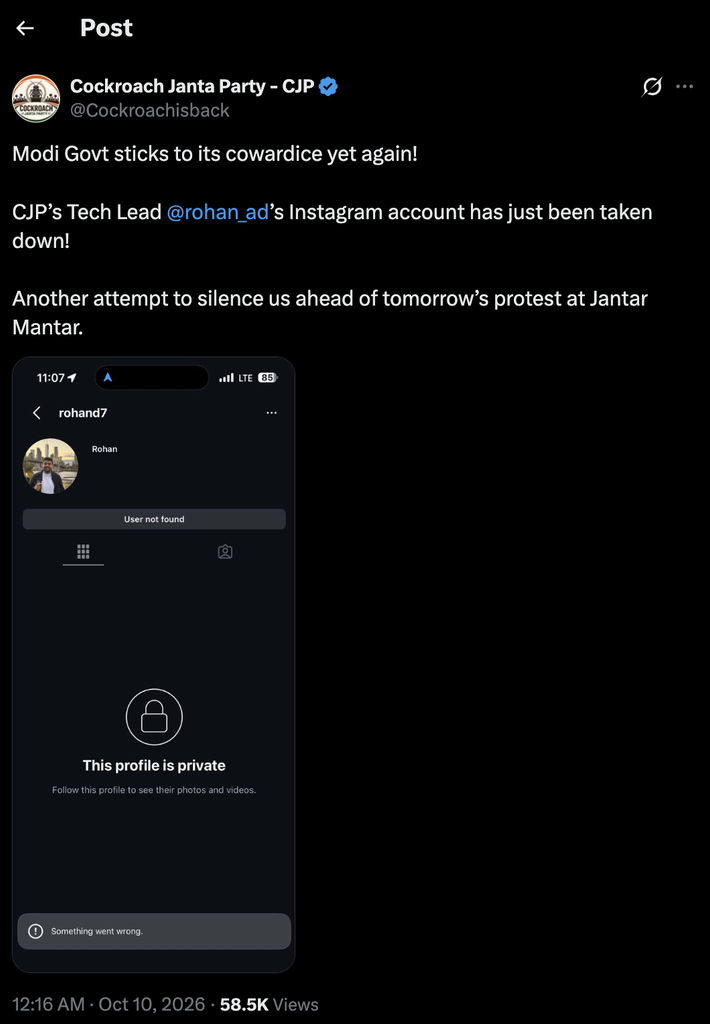
Accounts associated with the Cockroach Janata Party (CJP), including spokesperson accounts, state-specific accounts, and those of individual users with variations of “CJP”, “Cockroach”, or “Cockroach Janata Party” in their usernames, were reportedly restricted in India without any clear legal basis being made available. These accounts frequently raised questions about the government and the Election Commission, amplified CJP’s posts, shared updates and content from the protests, and mobilised public support. Their restrictions limited the ability of these accounts to circulate protest-related information and reach their audiences.
5. Appreciation Posts
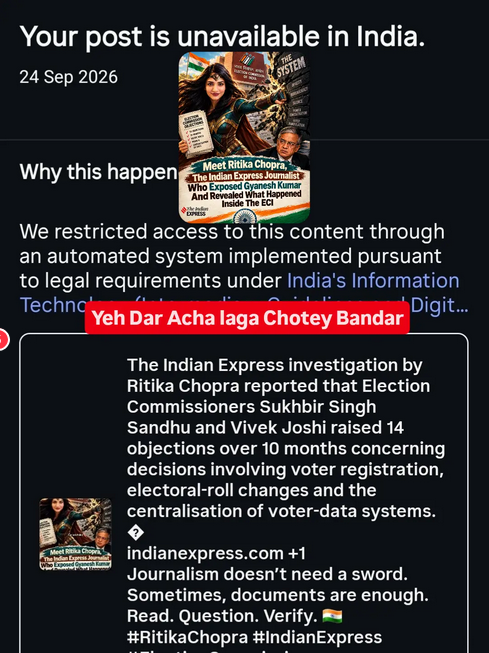
During the protests there were multiple people that came in support of CJP and Opposition Party members; some of these support turned into social media appreciation posts and edits of individuals leading the protest on ground. A post shared on Instagram by user @sarcasticaniket featuring an edited photograph of journalist Ritika Chopra, who reported on objections raised by two Election Commissioners to the Chief Election Commissioner’s (which led the nation to nationwide demands of the Chief Election Commissioners’ resignation) by the use of imagery featuring the popular fictional character ‘Wonder Woman’, was restricted in India. The post also featured a caption appreciating her investigative journalism.
Photos and edits shared of Lok Sabha MP Priyanka Gandhi, taken during the protests, were also restricted in India.
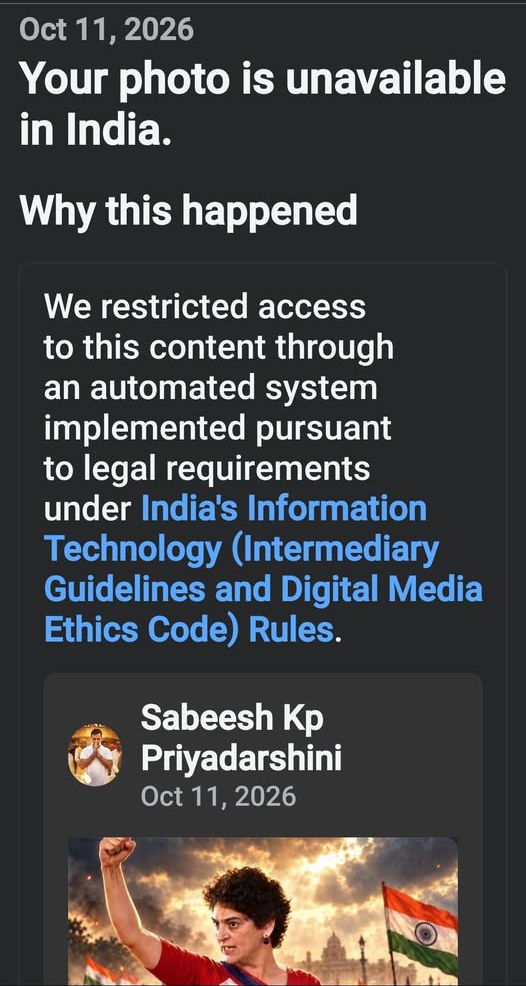
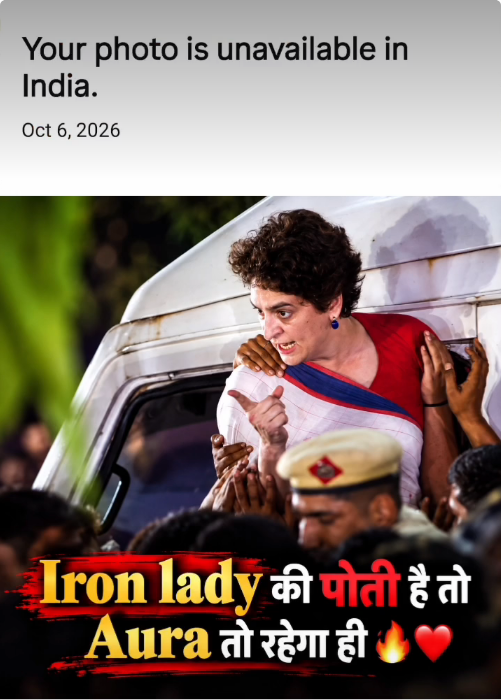
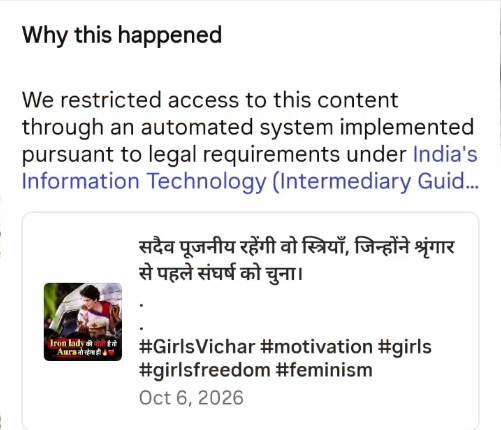
Multiple photos of the Leader of Opposition and Lok Sabha MP Rahul Gandhi waving the India flag from the protest of October 5th were also restricted. (We were able to track around 12 of them).
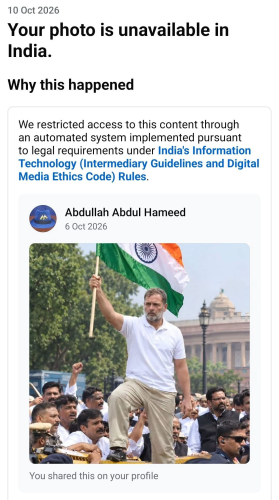
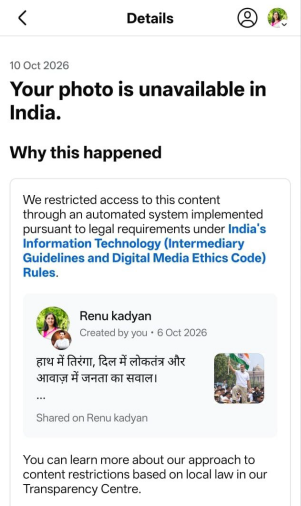
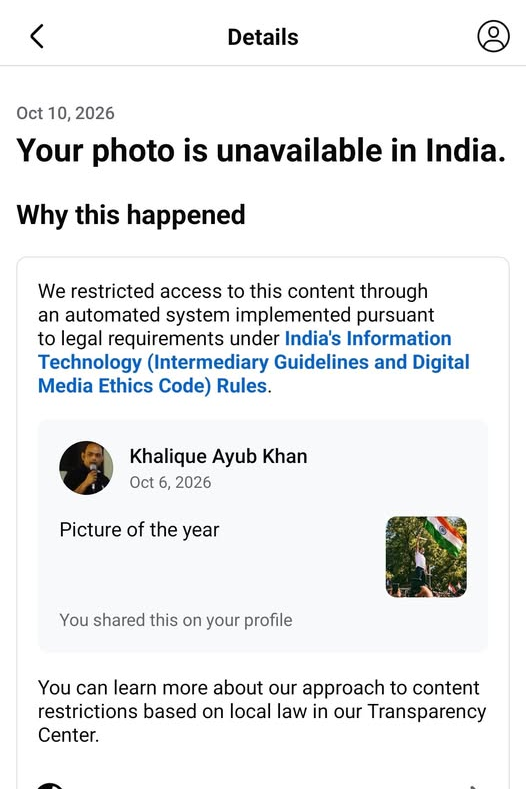
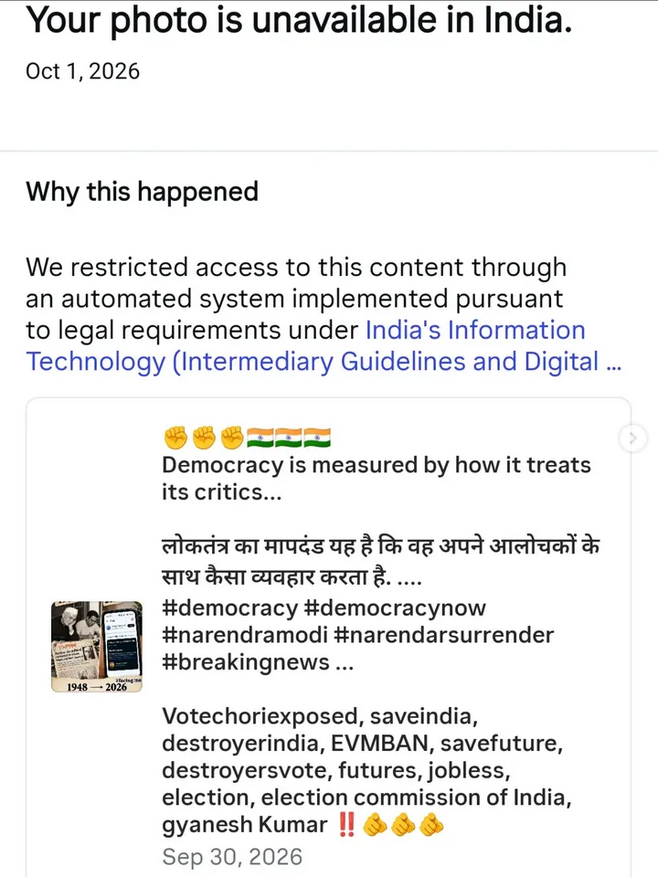
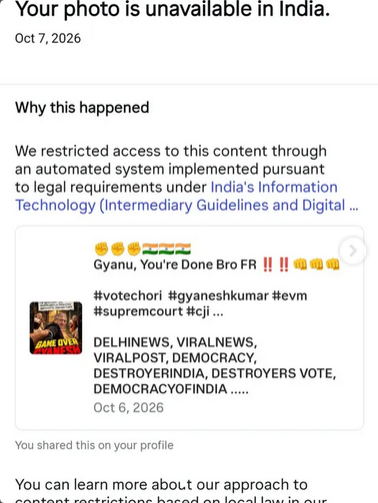
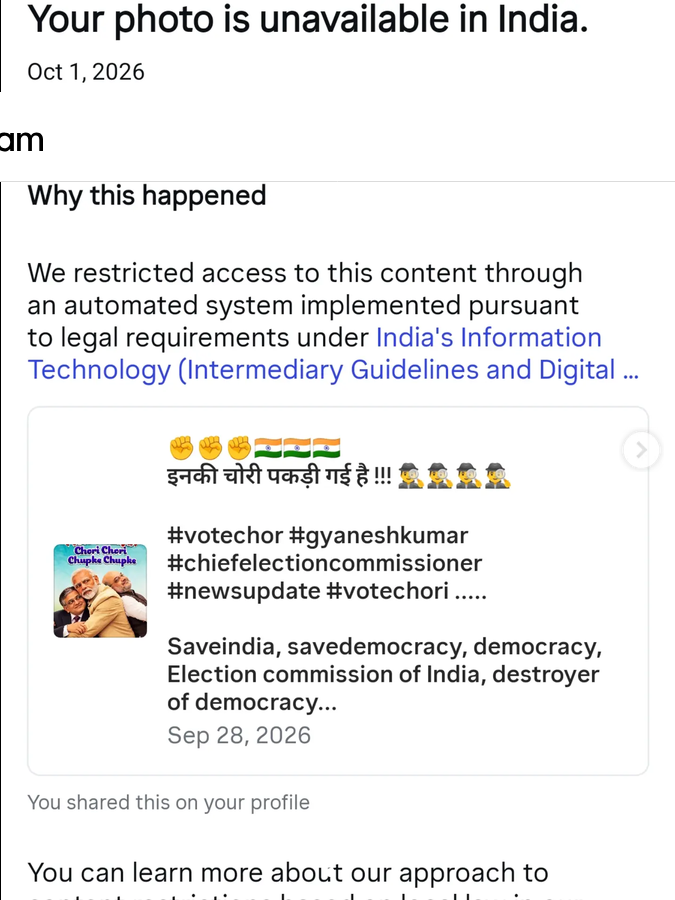
In most instances, the notices stated that access had been restricted through an “automated system” under the Information Technology Rules, 2021. However, these messages do not make it clear whether the restrictions were imposed in response to government orders or whether platforms were proactively restricting content they anticipated might be subject to takedown orders.
6. Temporary Account Restrictions
A new pattern of “temporary restrictions” emerged during the protests, with several accounts, including those of independent journalists and CJP-affiliated users (mentioned above), being temporarily restricted on Meta platforms under the Information Technology Rules, 2021.
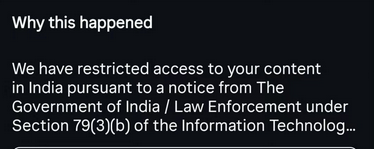
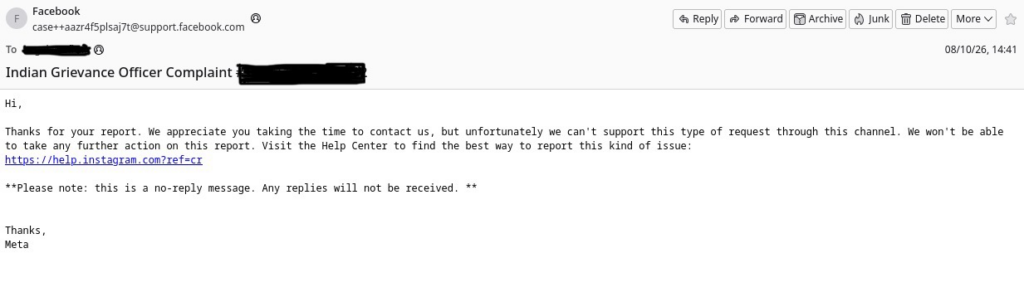
These restrictions did not specify when the accounts would become accessible again, provide a clear legal basis, or offer a means to appeal the restriction. It also remains unclear whether the restrictions were imposed pursuant to government orders or initiated by the platforms themselves. In one case reported to RightsLine, SFLC.in’s digital rights helpline, we attempted to file a complaint with the platform’s Grievance Officer to determine whether the restriction was government-directed or platform-initiated. However, the response stated that such cases could not be addressed through the Grievance Officer complaint channel, leaving the user without clarity on the basis for the restriction or a clear avenue to challenge it.
7. Cartoons and Cartoonists
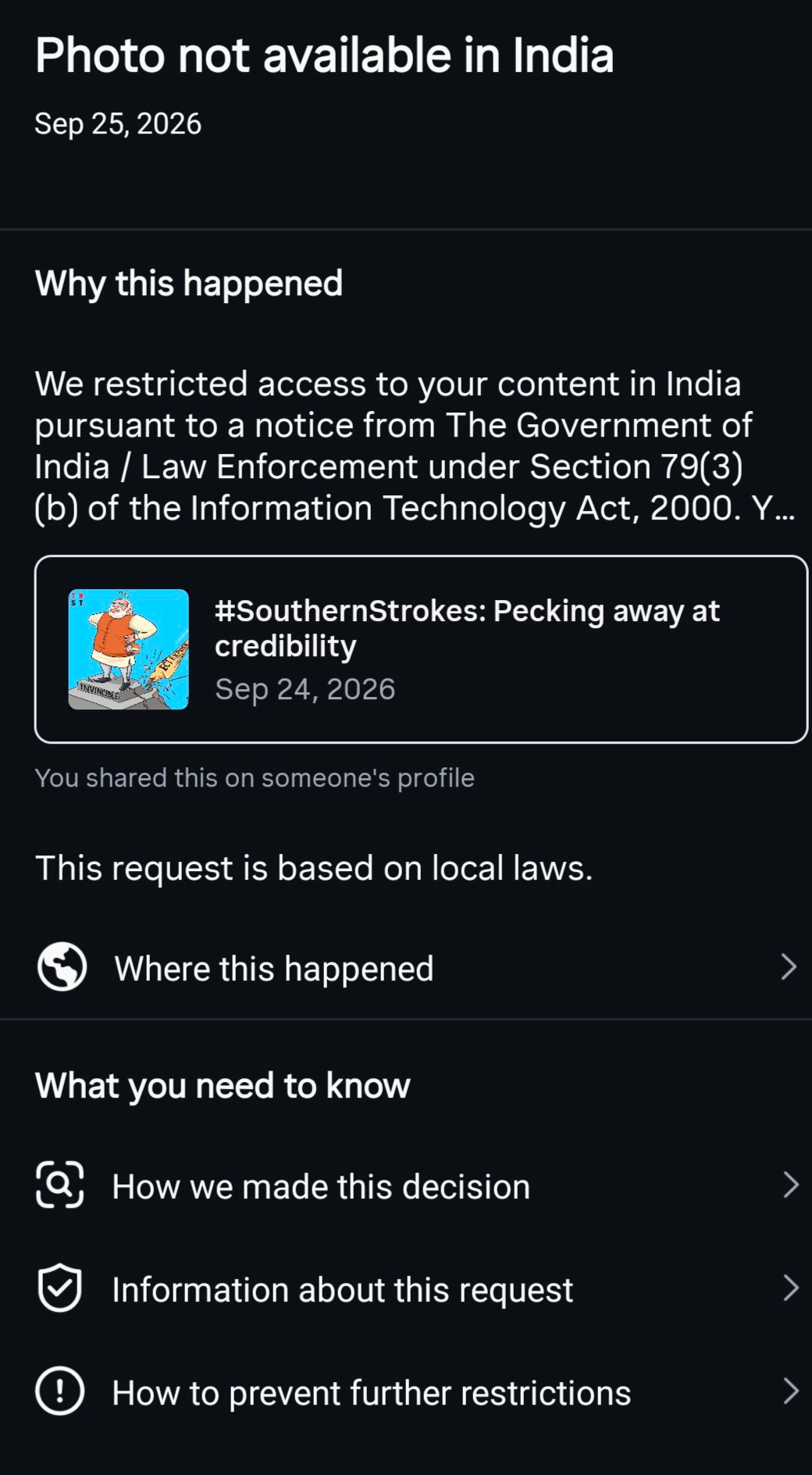
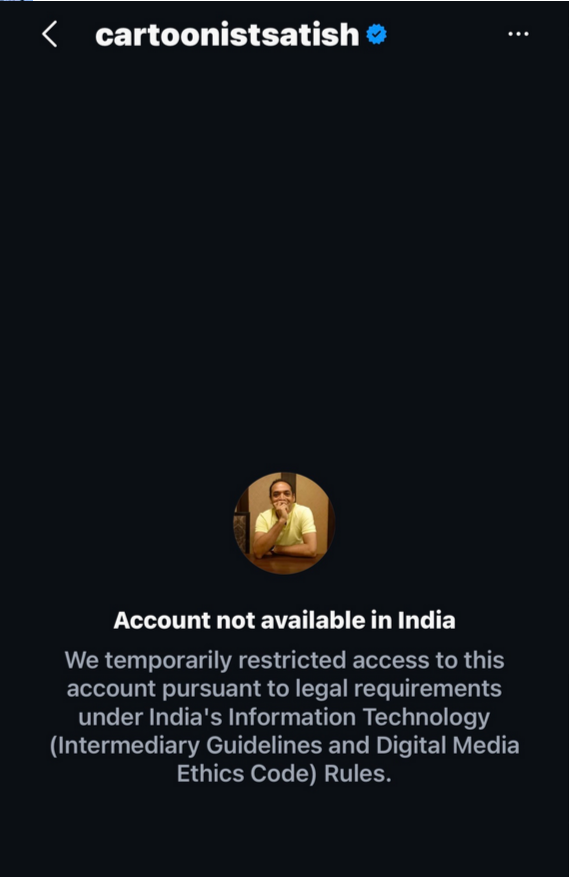
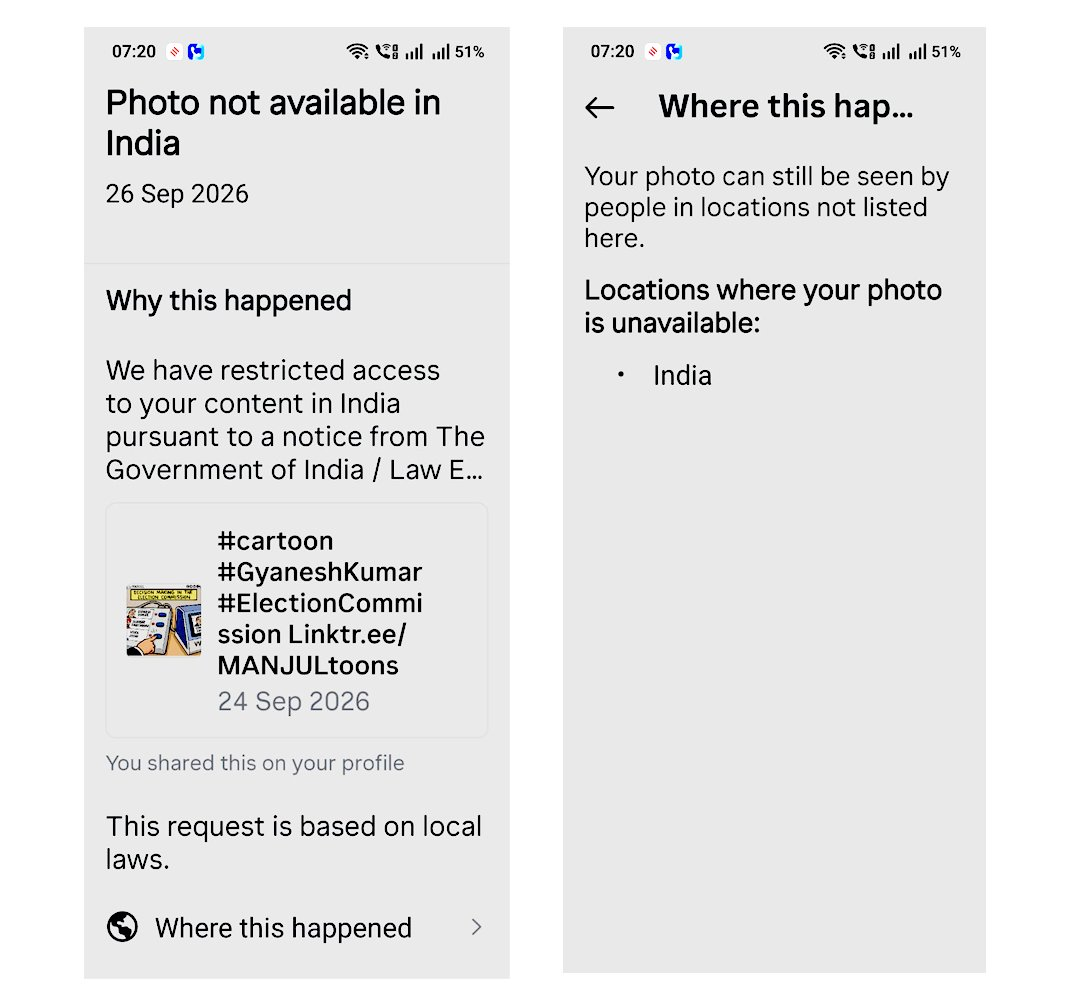
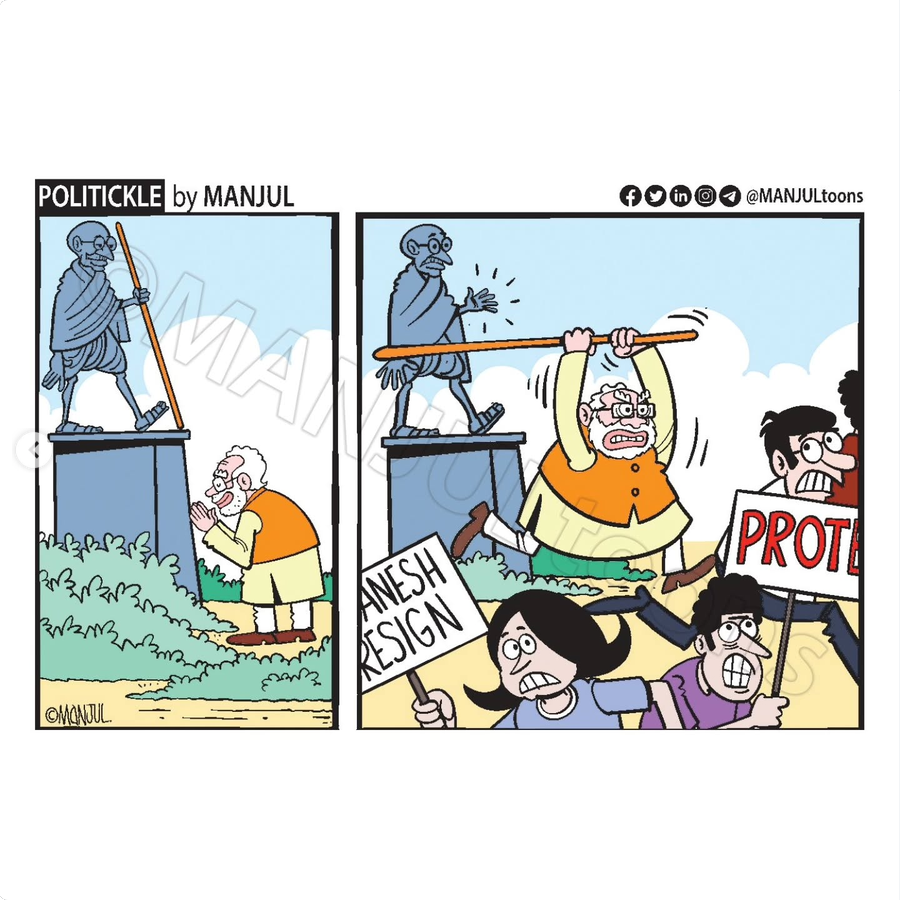
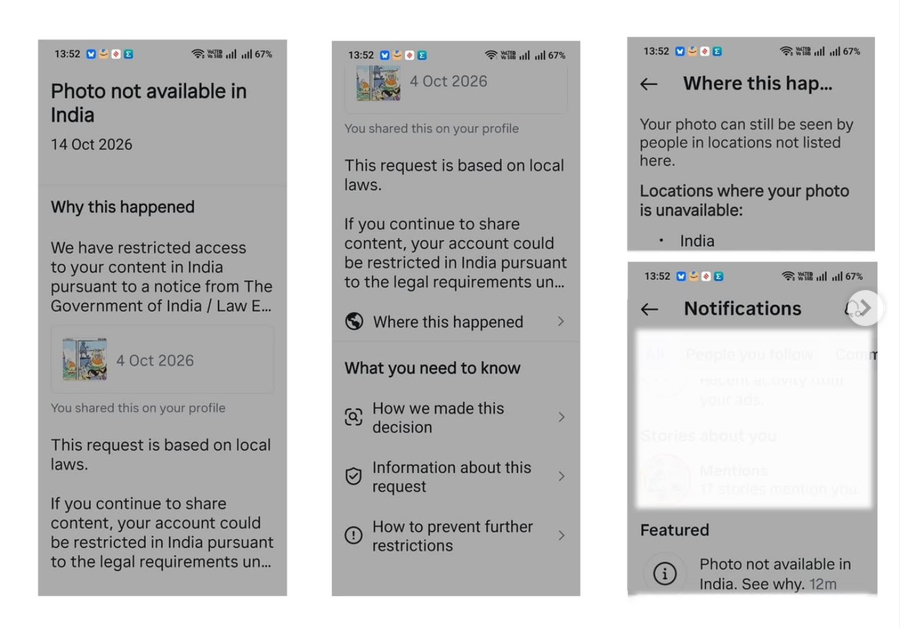
Political cartoons are one of the oldest forms of satire in India, they have always served the purpose of sugarcoating thought in laughter. However such cartoons also faced digital restrictions during the protests. Popular cartoonist Satish Acharya cartoons were initially restricted on Instagram and later, his account itself was restricted “temporarily” over the cartoons he drew about the Election Commission of India.
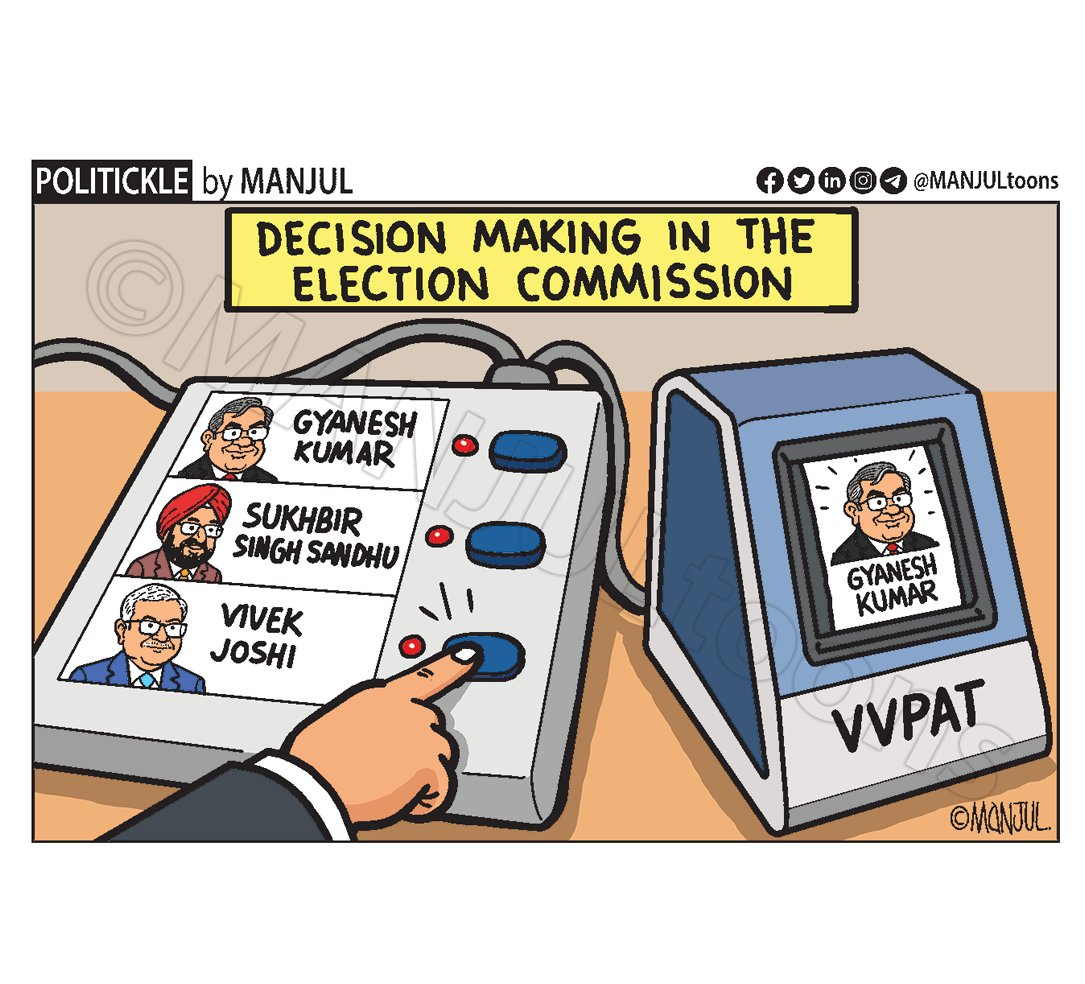
Popular cartoonist Manjul also faced content restrictions on his cartoons about the Election Commissioners of India based on Ritika Chopra’s investigative report.
8. Art and Memes
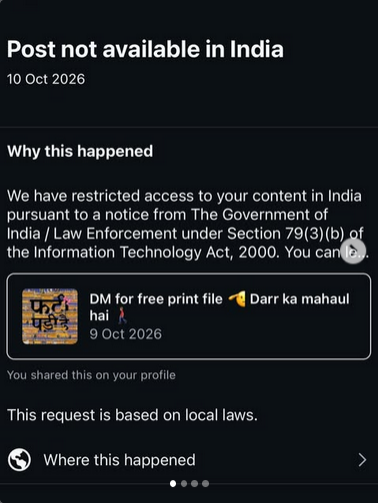
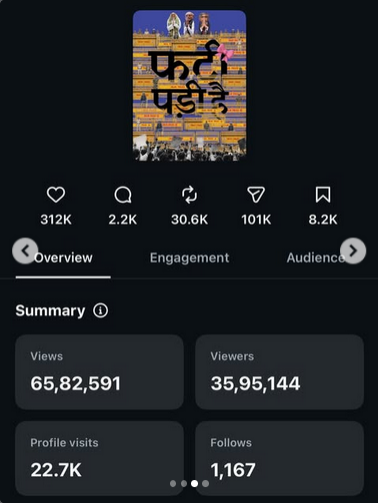
From all of the above it is no surprise that restrictions also extended to art, memes, and other forms of creative or comical expressions shared online during the protests. One such example was a poster featuring the Hindi phrase “fati padi hain” (“feeling terrified”), with a background of Delhi Police barricades criticizing Delhi Police’s extreme measures to curb protests in India. The post had received 312k likes, 101k shares, and 6.5 M views before it was restricted in India.
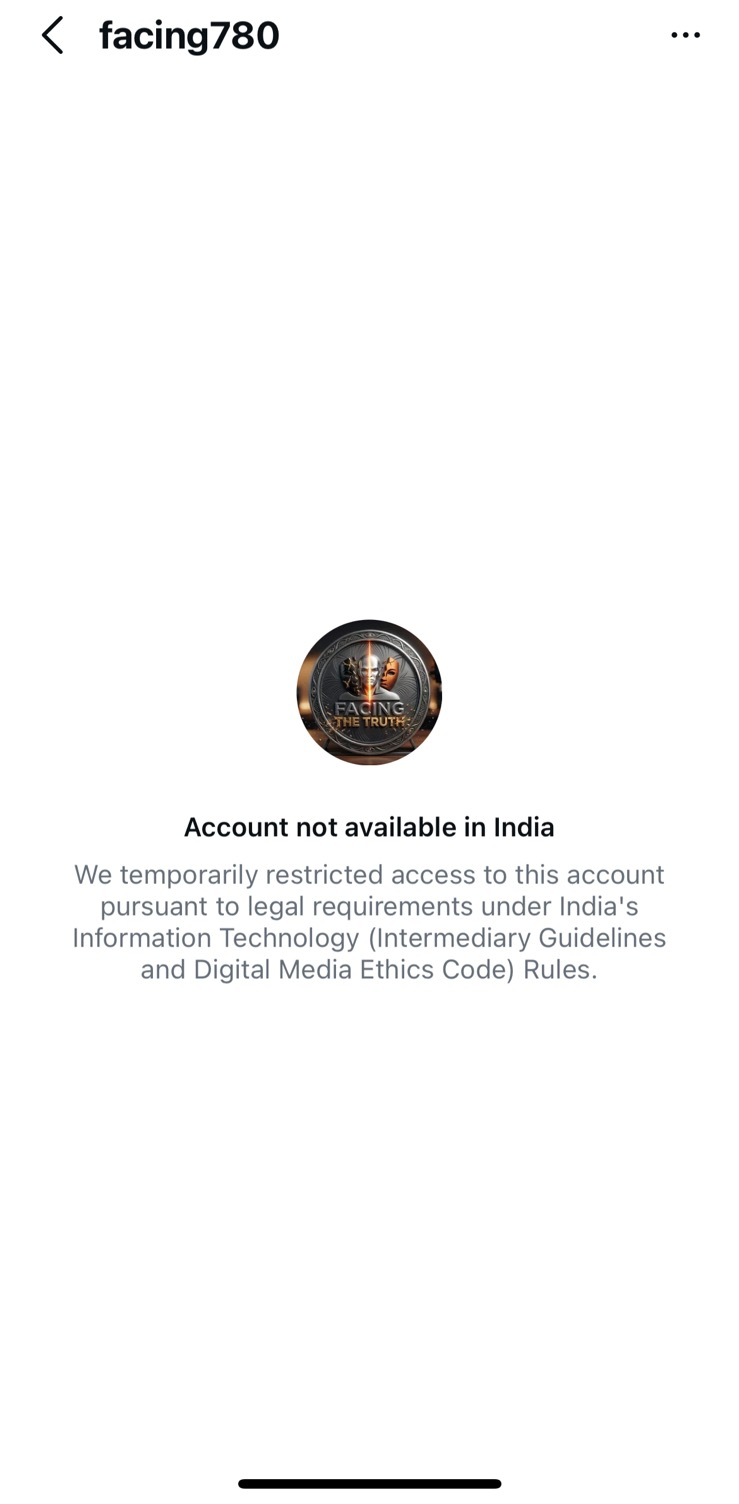
A popular meme page which posted satirical images with captions demanding ECI resignation received multiple takedown orders (30+) and eventually the account (@facing780) was restricted in India.
Legal Analysis
Content posted, or an account maintained, on social media platforms can be legally restricted in India if it is unlawful and falls within the constitutionally recognised reasonable grounds for restriction under Article 19(2), such as sovereignty and integrity of India, security of the State, public order, decency or morality, contempt of court, defamation, or incitement to an offence, as well as any information prohibited under existing law. Section 69A of the Information Technology Act read with the Information Technology (Procedure and Safeguards for Blocking for Access of Information by Public) Rules, 2009, and Section 79(3)(b) read with Rule 3(1)(d) of the Information Technology (Intermediary Guidelines and Digital Media Ethics Code) Rules, 2021 (“IT Rules, 2021”) operationalise the grounds for content removal in India.
While platforms do not always disclose the specific legal basis for a restriction, in some instances, the notices issued by Meta platforms or emails sent by X informing users of takedown requests identify the provision or mechanism under which the restriction was imposed.
1. Section 69A of the Information Technology Act 2000
Under Section 69A of the Information Technology Act, 2000, the Central Government or an officer specially authorised by it may direct a government agency or intermediary to block public access to digital information on specified grounds, subject to the procedures and safeguards prescribed under the Information Technology (Procedure and Safeguards for Blocking for Access of Information by Public) Rules, 2009.
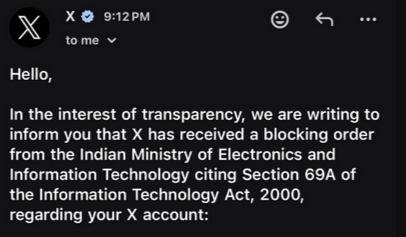
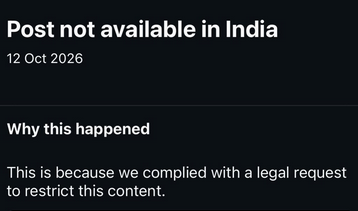
When X receives a government takedown order under Section 69A, it sends an email to the affected user informing them of the restriction and, in some instances, identifies the government authority that requested it. Meta platforms, by contrast, do not provide users with details about the legal basis or the government that is issuing the takedown order under Section 69A.
Users are not provided with the reasons underlying blocking orders. This is because Rule 16 of the Information Technology (Procedure and Safeguards for Blocking for Access of Information by Public) Rules, 2009, requires strict confidentiality regarding requests and actions taken under the blocking mechanism. The co
2. Section 79(3)(b) of The Information Technology Act 2000
Section 79(3)(b) of the Information Technology Act, 2000, is increasingly being cited by platforms as the legal basis for content restrictions. Unlike the blocking mechanism under Section 69A, Section 79(3)(b) concerns the conditions under which an intermediary may lose its safe harbour protection for failing to remove or disable access to unlawful information after receiving the requisite notice. In practice, government authorities and their agencies have used this provision to issue takedown notices to intermediaries, creating a parallel mechanism for content removal outside the formal blocking procedure under Section 69A. The Sahyog Portal further facilitates this process by providing a centralised platform through which government authorities can send content removal requests to intermediaries.
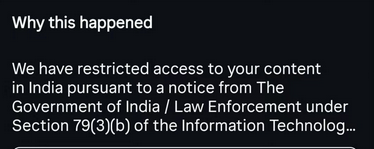
The notices issued by platforms reveal differences in the information disclosed to users. Meta platforms generally identify Section 79(3)(b) as the legal basis for a restriction but do not disclose the government authority that issued the notice. X, by contrast, identifies both the legal provision and the government authority involved in email sent to users informing about takedown. However, neither platform consistently provides users with the specific reasons why their content was restricted. Unlike the Section 69A blocking mechanism, which is subject to the confidentiality requirement under Rule 16 of the IT Blocking Rules 2009, Section 79(3)(b) does not carry the same express confidentiality requirement for takedown notices.
The constitutionality of takedowns under Section 79(3)(b) of the IT Act, 2000 read with Rule 3(1)(d) of the IT Rules, 2021, was challenged by X Corp before a Single-Judge Bench of the Karnataka High Court in October 2025. The Hon’ble Single-Judge Bench upheld the validity of the Sahyog Portal, and consequently, upheld the impugned provisions as a legal basis for content takedown. Though X Corp has appealed the judgement, in August 2026 the Supreme Court issued an interim stay on the High Court proceedings.
3. Automated Systems implemented under Information Technology Rules 2021
Some notices issued by Meta platforms stated that content had been restricted through an “automated system” under the Information Technology Rules, 2021. However, these notices did not specify the exact legal provision invoked, the reason for the restriction, or whether the restriction was triggered by a government request or Meta’s own content moderation processes as part of their due diligence requirements. The use of automated systems, without further information about the decision, makes it difficult for users to understand why their content was restricted.
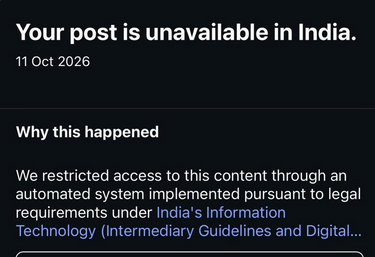
This situation is exacerbated by the fact that the official Meta Grievance Officer intake form for reporting does not provide a method to report the takedown of content, either for violations of Meta Community Standards, Terms of Service, or through “automated systems implemented under legal requirements”. The response from the Meta AI support assistant instead asks users to physically send an email to the resident Grievance Officer, creating an entirely separate standard for reporting content takedown as opposed to other grievances.
As per the Meta platforms the email available on the website can only be used to enquire about the grievance redressal mechanism and not to file a Grievance Office report. This not only creates excessive additional friction for users, especially in the case of news reporting, effectively silences journalists and curbs the spread of information for significant periods of time. This also creates a structural barrier to access further remedies such as approaching the Grievance Appellate Committee, which mandatorily requires a Grievance Officer report to be filed prior to filing an appeal.
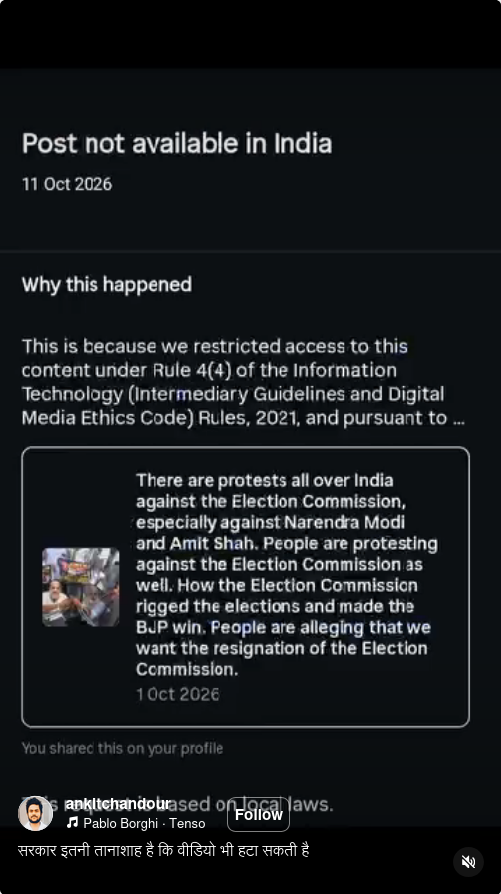
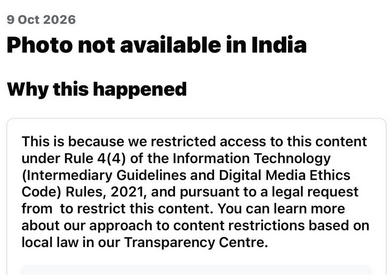
4. Rule 4(4) of the Information Technology Rules 2021
A new instance of notice issued for content takedown was seen during the protest, where Meta platforms specifically cited Rule 4(4) of the Information Technology (Intermediary Guidelines and Digital Media Ethics Code) Rules, 2021. This provision requires significant social media intermediaries to deploy technology-based measures, including automated tools, to proactively identify specified categories of content, including material depicting rape or child sexual abuse and information that is exactly identical to content previously removed or disabled under Rule 3(1)(d) of IT Rules 2021. It also requires the intermediary to display a notice to users attempting to access such information. However, the notices did not explain how the restricted posts fell within either of these categories or identify the previously removed content to which the posts were allegedly identical. The notice also does not reveal from which authority the takedown order came (this seems to be intentional since the notice seems to have an incomplete sentence “pursuant to a legal request from to restrict this content” ). Without this information, users are left unable to understand the basis for the restriction or assess how the provision applies to their content.
MeitY Advisory dated 8th October 2026
On 8th October 2026, Ministry of Electronics and Information Technology (MeitY) released an Advisory directing social media intermediaries to exercise enhanced diligence in addressing allegedly false, misleading, manipulated or out-of-context content that may affect public order. This Advisory comes at a time where protests and public demonstrations are taking place across the country and an unprecedented number of content takedowns are being recorded on a daily basis. Just days after the Advisory was issued, there have been reports of Delhi Police monitoring social media platforms to curb the spread of misinformation amid protests in the capital, with around 300 posts allegedly aimed at spreading rumours or creating public unrest taken down. The lack of transparency makes it impossible to determine whether these posts were actually problematic and needed to be taken down.
The Cost of Silencing Dissent
From all of the above instances some things are clear – that platforms are increasingly becoming unreliable spaces for dissent, and that the definition of the term “unlawful activity” is being stretched to “any content that is unfavorable to the Government”. The lack of transparency surrounding blocking orders, including the failure to disclose the reasons for takedowns, the arbitrary takedowns of factual information, art, and memes, all undermine the users’ basic right to know why action has been taken against their content and to meaningfully challenge such decisions. This runs contrary to the principles of natural justice and violates the fundamental right to freedom of speech and expression under Article 19(1)(a) of the Constitution.
Platforms, too, fail to provide users with adequate transparency or effective remedies. Their grievance redressal mechanisms often fail to offer meaningful recourse, leaving users with little clarity on why their content was removed or how they can contest the decision. The increasing reliance on automated moderation systems risks further aggravate these shortcomings by making erroneous or opaque takedowns harder to challenge. The suppression of critical journalism, satire, and political commentary especially during times of protest, through opaque executive action is not a legitimate regulatory objective, it is a threat to democracy itself. When such practices are left unchecked it risks normalising a system in which online speech is governed not by clear legal standards and due process, but by the unaccountable discretion of government authorities and private platforms. Such a system runs antithetical to our fundamental rights as citizens of India, as well as our inalienable, universal, human rights.