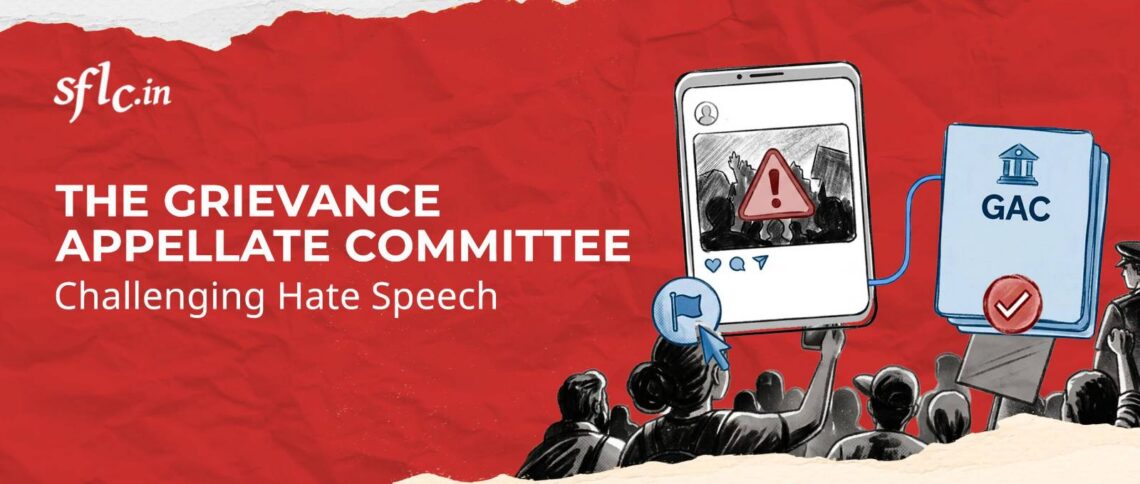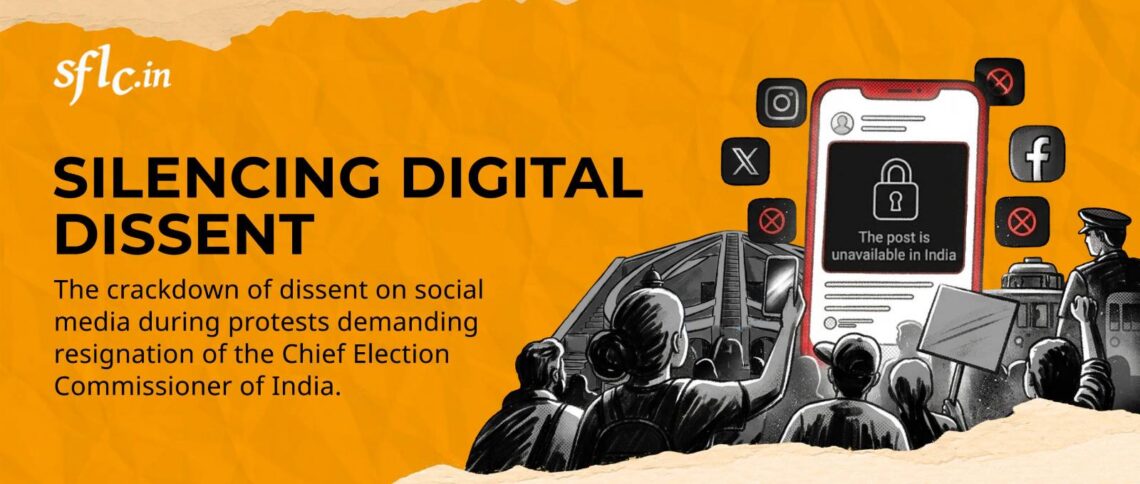
SFLC.in strongly objects to the arbitrary, unconstitutional takedown of online content deemed “objectionable, abusive, and offensive” by the Delhi Police today.
As reported, the Delhi Police’s social media monitoring team has been scanning online platforms to identify objectionable content, and upon identification, has been sending notices to social media intermediaries directing them to remove the content. Both existing and newly uploaded content are being monitored, and at least three social media platforms have been served notices to take down content, subsequent to which, several posts have already been taken down.
This takedown drive is contrary to the rule of law and to India’s constitutional commitment to freedom of speech under Article 19(1)(a). The restrictions on free speech laid out in Article 19(2) are specific, and do not include “objectionable, abusive, or offensive” speech as one of the legitimate grounds to block free speech. Taking down content on the vague grounds that it is “objectionable” also directly contradicts the judgment of Shreya Singhal v Union of India, which struck down Section 66A of the Information Technology Act, 2000 precisely because the usage of words like “grossly offensive” and “menacing character” were undefined and therefore vague, arbitrary and unreasonable.
The current practice of issuing vague orders that invoke generic grounds such as “objectionable” or “offensive” is inconsistent with the safeguards laid down in Shreya Singhal. The Supreme Court upheld Section 69A of the Information Technology Act, 2000 strictly because it required that blocking orders must be reasoned, necessary, and proportionate, and that such reasons must be recorded in writing to enable judicial review. In the present case, notices sent to social media intermediaries through the Sahyog Portal under Section 79(3)(b) of the IT Act and Rule 3(1)(d) of the IT Rules, 2021, leave users in the dark, with no recourse to meaningfully challenge takedowns and leave affected parties without legal redressal. The Sahyog Portal puts in place a parallel system to take down content online, without any of the safeguards present under Section 69A.
The opacity surrounding these takedowns goes against the strict requirements of accountability and record-keeping embedded in the Information Technology (Procedure and Safeguards for Blocking for Access of Information by Public) Rules, 2009. Instead, what we see emerging through these takedowns is a system of informal, decentralised censorship, where the government can direct content removals without transparency or oversight.
SFLC.in has consistently emphasised the need for transparency, and primacy of user rights in content moderation. The cumulative effect of current developments is the creation of a black-box censorship regime, where users are silenced without any transparency or accessible remedies.
In light of the above, SFLC.in calls for the following:
- Immediate disclosure of all takedown orders issued to platforms, including specific reasons and legal justifications.
- Strict adherence to the procedural safeguards laid out under Section 69A and the 2009 Blocking Rules, which were upheld by the Supreme Court in Shreya Singhal.
- Notices received by social media intermediaries to be sent to every user affected to ensure transparency.
- Strengthening of independent oversight and appellate mechanisms to ensure that users can effectively challenge unlawful restrictions.